



SIGNS OF HIGH RISK PREGNANCY WHEN TO SEE A GYNECOLOGIST
Signs of High-Risk Pregnancy: When to See a Gynecologist
Most pregnancies go smoothly. Some do not. And the ones that do not, the ones where something quietly goes wrong before anyone notices, are usually the ones where the warning signs were there but got brushed aside.
A high-risk pregnancy does not mean something will definitely go wrong. It means certain factors a medical condition, the mother's age, a complication that develops make it more likely that something could. The response to that is closer monitoring, not fear.
Knowing the signs of high-risk pregnancy, recognising high-risk pregnancy warning symptoms before they escalate, and understanding when to consult a gynaecologist during pregnancy these three things are what actually change outcomes.
What Puts a Pregnancy in the High-Risk Category
Some factors are there from the start. Pre-existing diabetes, high blood pressure, thyroid conditions, autoimmune disorders, a history of miscarriage or premature birth these all go into the high-risk classification before a pregnancy even properly begins.
Others develop along the way. Gestational diabetes appears in the second trimester for some women with no prior history of blood sugar issues. Pre-eclampsia, high blood pressure combined with protein in the urine, can develop in the third trimester without warning. Placenta problems, infections, and foetal growth restriction all fall into this category too.
Age is a factor at both ends. Pregnancies under 17 and over 35 carry higher complication rates statistically. Multiple pregnancies, twins, and triplets are automatically monitored more closely.
Lifestyle factors add to the picture. Obesity, smoking, alcohol, and sustained high stress all increase risk in ways that are addressable but only if they are addressed early.
None of this means the pregnancy will end badly. It means someone needs to be watching more carefully and more often.
Symptoms That Cannot Wait
There is a difference between symptoms worth mentioning at the next appointment and symptoms that need a call today. These are the ones that cannot wait:
- Heavy vaginal bleeding or persistent spotting
- Severe abdominal pain or cramping that does not settle
- Severe headaches that are not touched by normal pain relief
- Sudden blurred vision or any visual disturbance
- Rapid or significant swelling in the face, hands, or feet
- A clear reduction in baby movements after 20 weeks
- High fever that does not come down
- Persistent vomiting that is stopping normal food and fluid intake
- Sudden sharp weight gain over a short period
These high-risk pregnancy warning signs point towards conditions like pre-eclampsia, placental abruption, or infection. None of them are situations where waiting is appropriate.
The hesitation most women feel about calling the doctor over something that might turn out to be nothing is understandable. In pregnancy, the cost of waiting on something that is actually serious is far higher than the cost of an unnecessary call.
When to Actually See a Gynecologist
When to consult a gynaecologist is simpler than most people make it. The answer is earlier than feels necessary and more often than feels necessary.
For women planning a pregnancy, before conception is the right time. Pre-existing conditions get assessed and managed at that stage before they can affect a developing baby.
Once pregnant, the first appointment should happen in the first eight weeks. Monthly through the first and second trimesters is the standard rhythm. Visits increase in frequency as the due date approaches. In a high-risk pregnancy, the schedule is tighter sometimes every two weeks, sometimes weekly, depending on what is being monitored.
Between those scheduled visits, the warning signs listed above are the trigger for an immediate call. Not a note to bring up at the next appointment. A call the same day.
What Monitoring Actually Looks Like
In a high-risk pregnancy, the level of clinical attention is considerably more intensive than routine prenatal care.
Foetal growth is tracked at shorter intervals. Blood sugar, blood pressure, and urine protein are checked more frequently. If gestational diabetes develops, diet changes and sometimes medication are introduced and adjusted based on readings. If blood pressure climbs, it is managed actively rather than monitored passively.
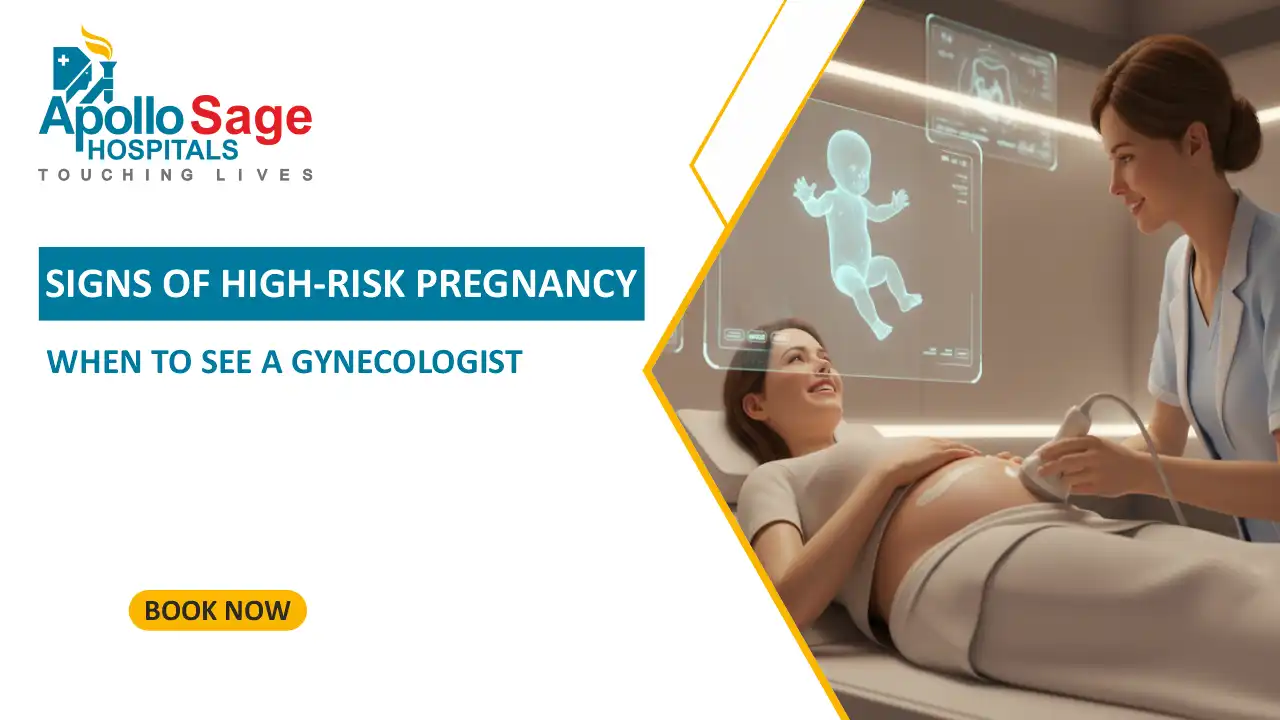
Advanced ultrasound, genetic screening, and foetal heart rate monitoring are used more often and earlier. The purpose is to catch a change in the baby's condition or the mother's health before it becomes an emergency, not to respond to one.
Delivery planning in a high-risk pregnancy starts early. The mode of delivery, the timing, the team needed, and the facility required are all determined well in advance based on the specific risks involved. None of that is left to the final weeks.
Treatment Tips for High-Risk Pregnancy
Following pregnancy care tips in India consistently makes a genuine difference regardless of risk classification.
- Show up to every appointment: This is where problems get caught. A missed checkup is a missed opportunity to find something early.
- Eat well: Iron, calcium, folate, protein these are not optional. Processed food, excess salt, and refined sugar increase the risk of gestational diabetes and blood pressure issues. A diet that is genuinely balanced, not just well-intentioned, matters.
- Stay active within limits: Walking and gentle movement support circulation, weight management, and mental state. What is appropriate in a high-risk pregnancy should be confirmed with the treating doctor. What works for one situation does not work for all.
- Sleep and manage stress: Chronic stress raises cortisol, which affects blood pressure and the hormonal environment of the pregnancy. Sleep, breathing exercises, and not carrying anxiety alone all have measurable effects.
- Do not take anything without checking first: Supplements, over the counter medication, herbal remedies all of it needs to be cleared with the gynaecologist. Many things that seem harmless are not safe during pregnancy.
Choosing the Right Facility
The gynaecologist is one part of the equation. Where the delivery happens is the other.
A facility managing high-risk pregnancies needs a neonatal intensive care unit, round-the-clock emergency obstetric cover, in-house diagnostic imaging, foetal monitoring equipment, and a coordinated team that includes obstetricians, paediatricians, and anaesthesiologists working together.
apollo sage hospital in Bhopal provides full-spectrum maternity care from standard prenatal visits through high-risk pregnancy management to emergency obstetric intervention with the infrastructure and specialist team that complicated pregnancies require.
FAQs
Q.1 What are the most common signs of high-risk pregnancy?
Heavy bleeding, high blood pressure, gestational diabetes, severe headaches, reduced foetal movement, and significant abdominal pain are the most frequent signs of high-risk pregnancy. Any of these need medical assessment not home management.
Q.2 When should a pregnant woman go straight to the hospital?
Any of the warning signs listed above heavy bleeding, high fever, sudden severe swelling, visual disturbances, or a clear drop in foetal movement are situations where knowing when to consult a gynaecologist and acting on it immediately is what prevents a manageable problem from becoming a dangerous one.
Q.3 What reduces the risk of complications?
Regular checkups, a balanced diet, appropriate physical activity, stress management, no alcohol or smoking, and following pregnancy care tips in India consistently. None of these alone are sufficient all of them together make a real difference.
Conclusion
A high-risk pregnancy is not a crisis. It is a situation that requires more attention, more honest communication with the treating doctor, and a clear understanding of what to watch for.
The symptoms of high-risk pregnancy are knowable. The high-risk pregnancy warning signs that need immediate action are specific. When to consult a gynaecologist is not a complicated question, the answer is early, often, and immediately when something does not feel right.
That level of attentiveness is what makes the difference.
