





PRIMARY ANGIOPLASTY FOR ACUTE MYOCARDIAL INFARCTION A SIMPLE GUIDE TO SAVING THE HEART
Primary Angioplasty for Acute Myocardial Infarction: A Simple Guide to Saving the Heart
Most people who survive a heart attack will tell the patient the same thing afterward they almost didn't come in. The chest felt tight but not terrible. The left arm ached, but they figured they'd slept on it wrong. The sweating seemed like the weather. There is something about the human mind that resists the idea that something catastrophic might actually be happening right now, in this body, on an otherwise ordinary Tuesday afternoon. That resistance kills people. Not because the treatment doesn't exist it does, and it works remarkably well but because people wait too long before asking for it. Understanding what a heart attack looks like and what happens when someone reaches a hospital fast enough is the kind of information that genuinely saves lives. This is not about saving lives in a vague, general sense. In a specific, measurable way, this person returned home to their family.
What Actually Happens During a Heart Attack
The heart is a muscle. Like every muscle in the body, it needs a constant supply of blood to keep working. That blood arrives through the coronary arteries small vessels that wrap around the outside of the heart and feed it oxygen with every beat. When one of those arteries gets blocked, usually by a clot forming on top of a fatty deposit that has built up over years, the section of heart muscle that artery was supplying starts to die. Not slowly. Fast. Every minute the blockage stays in place, more tissue is lost. Tissue that does not come back. The damage that happens in the first hour of a heart attack shapes what the rest of a person's cardiac life looks like. This is why the phrase "time is muscle" is used so often in cardiology it is not a slogan. It is a biological fact.
Recognising the Warning Signs
Heart attack symptoms are not always what people expect. Films have created an image of a man clutching his chest and collapsing dramatically. That happens, but it is not the only presentation. More often the signs are subtler and easier to dismiss a pressure in the centre of the chest that comes and goes, discomfort that spreads to the jaw or the left shoulder, unusual breathlessness while doing something that has never caused breathlessness before, nausea without an obvious reason, or a cold sweat that arrives out of nowhere. Women, at times, experience heart attack signs that are almost entirely a typical, such as fatigue, back pain, and a vague sense that something is wrong.
The pattern that matters most is this: if something feels off in the chest, the arm, the jaw, or the back and it is new and it is persisting, that is a reason to call for help immediately, not to sit down and wait for it to pass.
What Primary Angioplasty Does
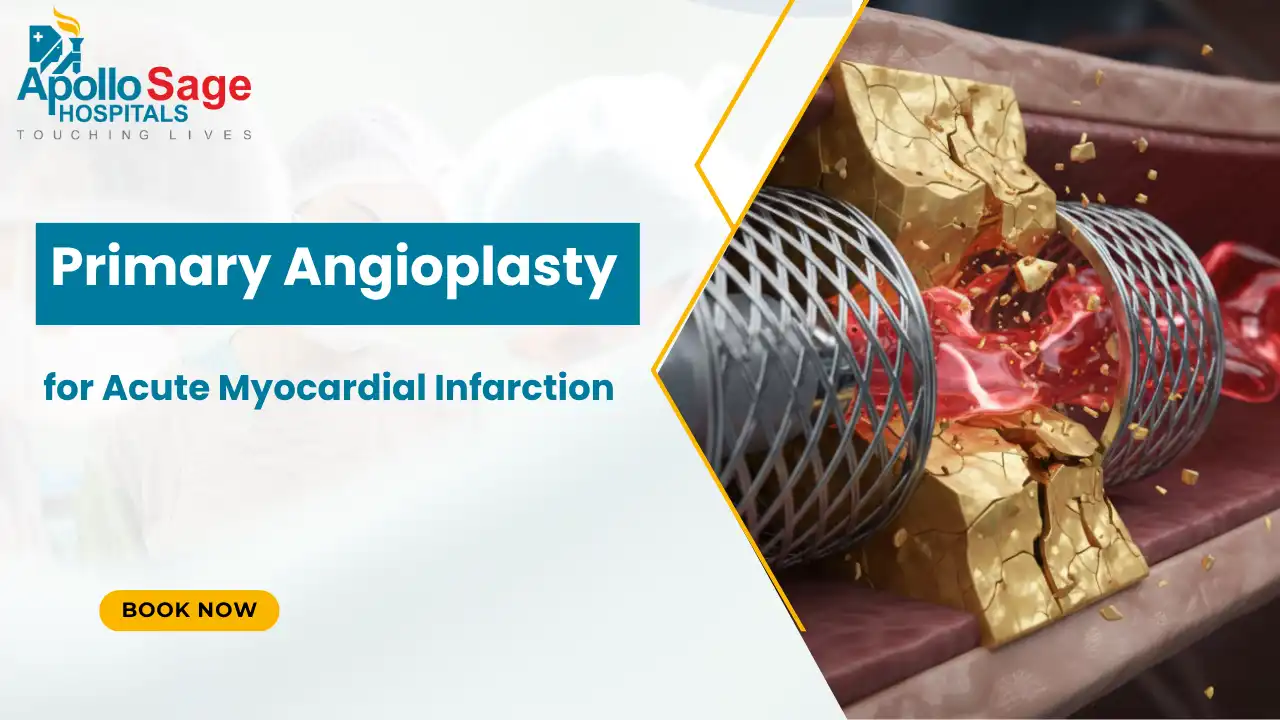
It is the standard emergency treatment for a blocked coronary artery. A cardiologist threads a thin catheter, a flexible tube, through an artery in the wrist or groin, guides it up to the coronary artery, and uses a small balloon at the tip to push the blockage open. A metal mesh stent is usually placed at the same time to keep the artery open and prevent it from closing again.
The whole procedure happens in a catheterisation lab, with the patient awake and the team watching the artery on live X-ray imaging. When it works, and most of the time, it does, blood flow to the affected part of the heart is restored within minutes. The tissue that was about to die gets oxygen again. The damage stops. It is faster and more effective than older clot-dissolving drug treatments, and the window for performing it, while not unlimited, is wide enough that most patients who reach hospital promptly are candidates.
The Role of Specialists and the Cardiology Department
Not every hospital can perform the first angioplasty. It requires a fully equipped catheterisation lab, a trained interventional cardiologist, and a support team that can move quickly. A qualified heart specialist in Bhopal working within cardiology will assess the patient, confirm the diagnosis with an ECG and blood tests, and make the call to proceed within minutes of arrival. The speed of that decision matters enormously. After the procedure, the same team monitors the patient's heart rhythm, blood pressure, and medication response because the first 24 to 48 hours after primary angioplasty are still a critical window. A heart specialist managing recovery in the Department of Cardiology is not just watching for problems. They are laying the groundwork for how well that patient's heart functions for the next decade.
A Story That Reflects the Reality
Meena, 58, felt a strange heaviness in her chest while cooking dinner. Her daughter noticed she had gone pale and was gripping the counter. They almost waited until morning. Instead, they went to the hospital that night. The team in the Department of Cardiology identified the blockage within twenty minutes of her arrival. A cardiologist specialist in Bhopal performed angioplasty first, and by the time Meena's husband arrived at the hospital, the procedure was already done. She was home in four days.
Conclusion
The gap between a good outcome and a devastating one in a heart attack is often measured in minutes, not hours. Knowing heart attack signs, getting to a hospital with a capable Department of Cardiology, and receiving a first angioplasty from an experienced heart specialist in Bhopal that chain of events, when it happens fast enough, gives the heart a real chance.
