





OPEN HEART SURGERY IN BHOPAL WHAT PATIENTS REALLY NEED TO KNOW
Open Heart Surgery in Bhopal: What Patients Really Need to Know
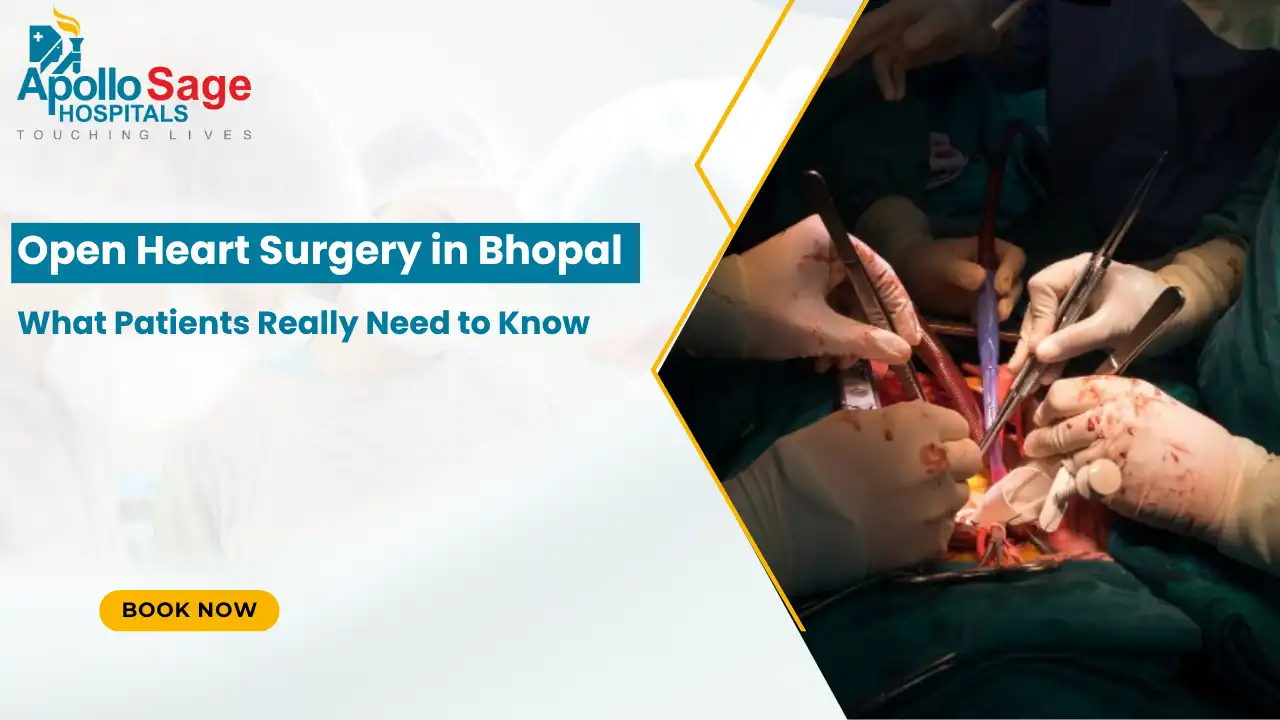
Heart trouble rarely announces itself politely. Sometimes it is a tightness in the chest during a morning walk. It is breathlessness climbing one flight of stairs. And sometimes, by the time a person sits across from a cardiologist, the damage is already significant enough that surgery is the only path forward.
Hearing that is hard. No amount of preparation makes it easy. But understanding what open-heart surgery actually involves not the version people imagine, but the real process changes how patients approach it. Fear built on vague ideas is far worse than fear built on facts.
The Point at Which Surgery Becomes Necessary
Arteries feeding the heart can narrow over years without obvious symptoms. Cholesterol deposits accumulate along artery walls, gradually restricting blood flow. The heart compensates for a while. Then it stops compensating. Chest pain sets in. Stamina drops. In serious cases, a heart attack follows.
When blockages reach a point where medication cannot adequately manage them, bypass surgery offers the most durable fix. A vessel usually taken from the leg or chest wall is used to redirect blood around the obstruction. The heart gets what it was being starved of.
Valve problems follow different mechanics but arrive at the same conclusion. A valve that sticks open or fails to seal properly throws off the entire rhythm of circulation. Repair works in some cases. Replacement works in others. A good heart surgeon in Bhopal makes that call after reviewing the patient's specific anatomy, not from a standard protocol.
Inside the Operating Room
The patient goes under general anaesthesia before anything begins. There is no awareness, no pain, no sense of time passing. Once the chest is open, most procedures require a heart-lung machine, a device that takes over circulation while the surgeon works directly on the heart. Blood keeps moving through the body. Oxygen keeps reaching organs. The surgeon has the time and stillness needed to work precisely.
What happens next depends on the case. Bypass grafting means sewing a new vessel into place. Valve repair means reconstructing tissue that has deteriorated. Each carries its own demands.
Hospitals in Bhopal that do heart surgery now use monitoring systems that keep track of the patient's blood flow in real time during the surgery. Any shift in blood pressure, oxygen levels, or electrical activity registers immediately. The team responds before it becomes a problem, not after.
The best surgeon for heart surgery is not simply someone with clean technical skills. Cases develop unexpectedly on the table. Anatomy does not always match what imaging suggested. The surgeon's calm, quick, and experienced judgement in those moments is just as important as the procedure itself.
What Recovery Actually Looks Like
The intensive care unit comes first. Nurses monitor everything: heart rhythm, fluid output, blood pressure, and oxygen saturation. The first night is the most closely watched. Most patients are surprised by how alert they feel by the following morning.
Movement starts earlier than people expect. Sitting upright. Breathing exercises that feel almost insultingly simple but matter more than they seem. Short walks down a hospital corridor. Each of these is deliberate; the body heals faster when it is gently asked to work.
Most places that do heart surgery in Bhopal also offer cardiac rehabilitation programmes that help people get better long after they leave the hospital. Diet, structured exercise, and stress reduction are not afterthoughts; they determine how the repaired heart performs three years down the line.
Follow-up appointments with a heart surgeon are part of the treatment in Bhopal, not optional extras. The heart's response to surgery needs watching. Problems caught early at a routine check are far simpler to address than problems that surface later.
What Nobody Talks About Enough
The weeks before surgery are psychologically brutal for many patients. Waiting is hard. Imagining worst-case outcomes is harder. Some patients arrive at surgery already exhausted from the anxiety that preceded it.
Talking directly and honestly with the surgical team beforehand changes this. Not reassuring platitudes, but actual information. What the procedure involves, what the first days of recovery feel like, and what realistic expectations look like for someone with this specific condition. Patients who go into surgery understanding what to expect recover differently from those who do not.
The best surgeon for heart surgery takes time for that conversation. It is not separate from treatment. It is part of it.
Family presence during recovery shifts the experience in ways that are difficult to quantify but easy to observe. The patients who do well rarely do it entirely alone.
Finding the Right Place for Treatment
Not every cardiac unit is the same. Surgical outcomes depend on the team surrounding the surgeon just as much as the surgeon themselves – anaesthetists, perfusionists, scrub nurses, intensivists, and rehabilitation staff. The whole structure matters.
For anyone weighing options for heart surgery, the conversation worth having is with a heart surgeon at Apollo Sage Hospitals in Bhopal who has actually reviewed the scans. Search results and patient forums cannot replace that. They can start the process. They cannot finish it.
Open heart surgery is demanding. For the right patient, with the right team, it is also one of the most effective treatments available anywhere in medicine.
