





KIDNEY CANCER TREATMENT IN BHOPAL RECOGNIZING SYMPTOMS AND TREATMENT OPTIONS
Kidney Cancer: Recognizing Symptoms and Treatment Options
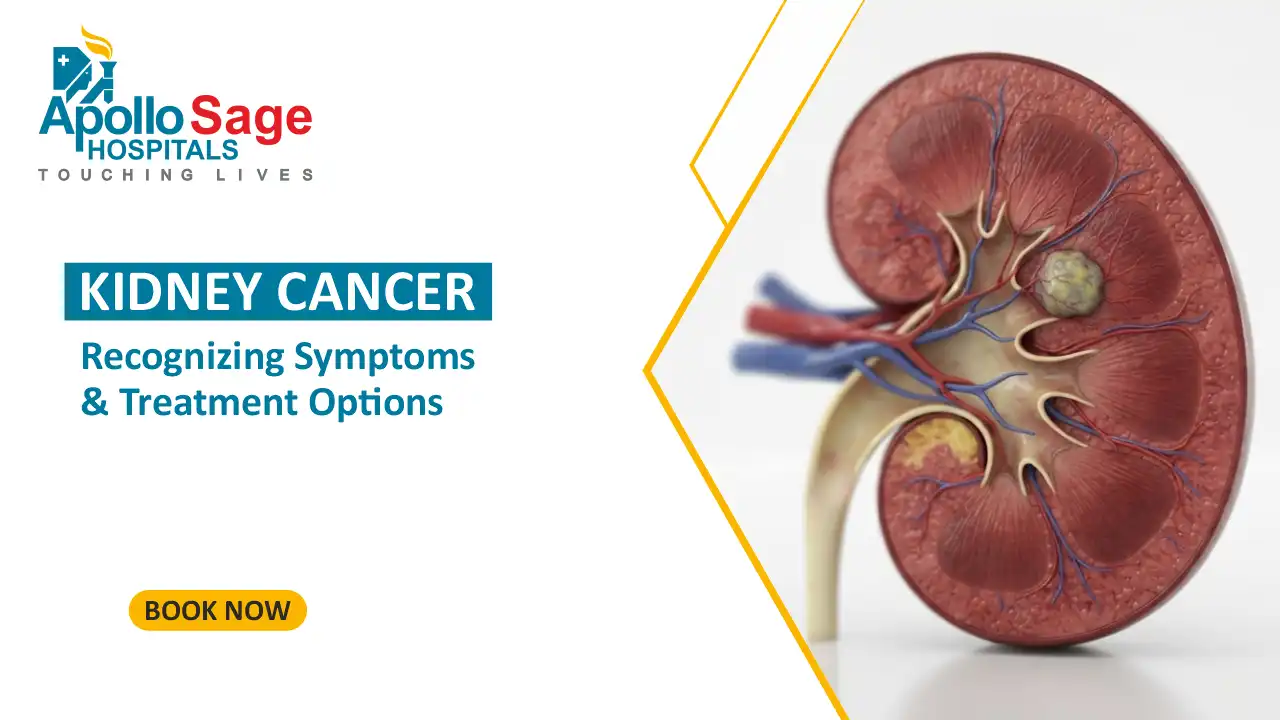
Kidney cancer has a reputation for being a silent disease, and for a meaningful stretch of its course, that reputation is accurate. Many kidney tumors grow for months or years without producing any symptom a person would notice. A growing share of kidney cancers today are actually found by accident - discovered on a CT or ultrasound ordered for an entirely unrelated reason - rather than because someone presented with classic symptoms.
This trend has changed our clinical approach to treating kidney cancer. It is also changing our understanding of what is truly useful for patients to know: which symptoms are genuinely important, when imaging results warrant a follow-up consultation with an urologist in Bhopal, and what treatment actually looks like once the diagnosis is confirmed.
Why So Many Cases Are Found Incidentally?
The kidneys are located deep within the abdominal cavity, in the retroperitoneal space, which means a tumor can grow to a fairly significant size before it presses on anything that produces a noticeable symptom. Combine that with how routinely abdominal imaging gets ordered now - for kidney stones, gallbladder concerns, back pain workups, even unrelated trauma - and incidental detection has become the most common route to diagnosis in many practices.
This is, on balance, good news. Incidentally, found tumors tend to be smaller and more localized, which generally means better treatment options and outcomes. However, there is a downside: patients sometimes don't take an incidental finding seriously enough, assuming that the absence of pain means no intervention is required. That assumption is exactly where appropriate follow-up matters most.
Symptoms To Watch Out For
When kidney cancer does produce symptoms, certain ones are worth taking seriously rather than attributing them to something more benign:
- Blood in the urine (hematuria), even a single episode, even if it isn't accompanied by pain
- Persistent pain in the side or lower back that doesn't resolve with typical measures
- A palpable mass or lump in the abdomen or flank area
- Unexplained weight loss, particularly when it isn't tied to diet or activity changes
- Persistent fatigue that doesn't track with sleep or stress levels
- Intermittent fever without an obvious infectious cause
- Swelling in the legs or ankles, which can occur if a tumor affects blood flow through nearby vessels
Of these, visible blood in the urine is the symptom most likely to prompt an immediate evaluation, and rightly so — it's one of the more specific warning signs and should never be dismissed as a one-off, even when it doesn't recur right away.
Who's at Higher Risk?
A few established risk factors raise the likelihood of kidney cancer, though many patients diagnosed have none of them:
- Smoking, which roughly doubles the risk compared to non-smokers
- Obesity is independently linked to a higher incidence
- Long-standing high blood pressure
- Chronic kidney disease or long-term dialysis
- Certain inherited genetic conditions, such as von Hippel-Lindau syndrome
- A family history of kidney cancer, particularly in a first-degree relative
- Occupational exposure to certain chemicals, including some industrial solvents
None of these guarantees a diagnosis, and their absence doesn't rule one out. They're useful mainly for understanding who might benefit from a lower threshold for investigating symptoms or incidental findings.
How Diagnosis Is Confirmed?
Once a kidney mass is suspected or detected, a standardized evaluation is typically performed. Imaging does most of the initial work — CT scans with contrasts are the standard for characterizing a renal mass, distinguishing solid tumors from benign cysts, and assessing whether cancer has spread beyond the kidney. Magnetic resonance imaging (MRI) is used selectively—often when there are contraindications to contrast agents or when more precise visualization of vascular involvement is required.
Biopsy isn't always necessary before treatment, which surprises some patients. For tumors with a classic appearance on imaging, particularly larger ones, surgery sometimes proceeds directly to both treat and definitively diagnose in a single step. Biopsy becomes more relevant for smaller, ambiguous masses or when the result would genuinely change the treatment plan. Staging—the process of determining whether cancer has spread to lymph nodes or distant organs—is based on a combination of imaging techniques and, if necessary, additional tests such as a chest CT scan.
A consultation with a urologist in Bhopal at this stage is what brings these pieces together. Rather than treating imaging, biopsy, and staging as separate, disconnected steps, an experienced urologist coordinates the workup with a specific treatment plan already in mind, thereby facilitating more effective medical care.
Treatment Has Become Considerably More Targeted
Kidney cancer treatment has shifted substantially over the past two decades, moving away from one-size-fits-all radical surgery toward approaches tailored to tumor size, location, and stage.
Surgical Options
For localized kidney cancer, surgery remains the primary treatment, though the type of surgery has changed considerably:
- Partial nephrectomy removes just the tumor and a margin of healthy tissue, preserving the rest of the kidney — now preferred over removing the whole organ whenever the tumor's size and location allow it
- Radical nephrectomy, removing the entire kidney, is still appropriate for larger or more centrally located tumors where partial removal isn't feasible
- Minimally invasive and robotic-assisted approaches have become standard for many cases, offering smaller incisions, less blood loss, and a meaningfully faster recovery compared to traditional open surgery
Non-Surgical and Systemic Options
- Active surveillance, appropriate for small, slow-growing tumors in select patients — particularly older patients or those with significant other health conditions — involves close monitoring with imaging rather than immediate intervention
- Thermal ablation (using heat or extreme cold to destroy tumor tissue) is an option for small tumors in patients who aren't ideal surgical candidates, performed through the skin rather than open surgery
- Targeted therapy, using drugs that interfere with the blood supply tumors need to grow, has meaningfully extended outcomes for advanced or metastatic kidney cancer
- Immunotherapy, which works by helping the body's own immune system recognize and attack cancer cells, has become a significant part of treatment for advanced disease and has changed the outlook for many patients who would have had limited options a decade ago.
The right combination depends heavily on tumor stage, location, and overall patient health, which is exactly why treatment planning benefits from a urologist in Bhopal experienced specifically in kidney cancer rather than general urology alone.
What Recovery and Follow-Up Involve?
Recovery timelines vary by procedure, but a few things apply broadly:
- Kidney function is monitored closely after partial or radical nephrectomy, since the remaining kidney tissue takes on additional workload
- Regular imaging follow-up continues for years after treatment, since recurrence, while not the norm, remains possible and is more treatable when caught early
- Blood pressure and overall kidney health become an ongoing focus, particularly for patients who've had a kidney removed entirely
- For patients on targeted therapy or immunotherapy, regular monitoring tracks both treatment response and potential side effects
When to See a Urologist?
It is recommended to schedule a consultation as soon as possible if visible blood appears in the urine, if there is persistent, unexplained flank pain, or a mass that can be felt in the abdomen. A consultation is also necessary if a kidney abnormality is incidentally discovered during imaging performed for another reason; such a finding requires a thorough evaluation, not a "wait and see if anything changes" approach.
For patients in central India, consulting an experienced urologist in Bhopal—ideally a specialist in kidney tumors rather than a general urologist—is crucial for both diagnostic accuracy and the selection of available treatment options. Early examination often opens up a wider range of possibilities, including organ-sparing surgeries and minimally invasive techniques; however, as the tumor grows or spreads, such options may no longer be viable.
Conclusion
Over the past two decades, the treatment for kidney cancer has improved significantly due to a combination of factors: more frequent detection of the disease during examinations for other conditions, advancements in surgical techniques, and the emergence of truly effective systemic therapies for advanced forms of the disease. The most important step the patient can take is not to ignore warning signs—whether they are persistent symptoms or abnormalities discovered incidentally that might otherwise be overlooked due to a lack of pain. Seeking timely consultation with a specialist at an early stage remains the most reliable way to ensure that all treatment options remain available.
