




HERNIA SURGERY BENEFITS OF LAPAROSCOPIC TREATMENT AND FASTER RECOVERY
Hernia Surgery: Benefits of Laparoscopic Treatment and Faster Recovery
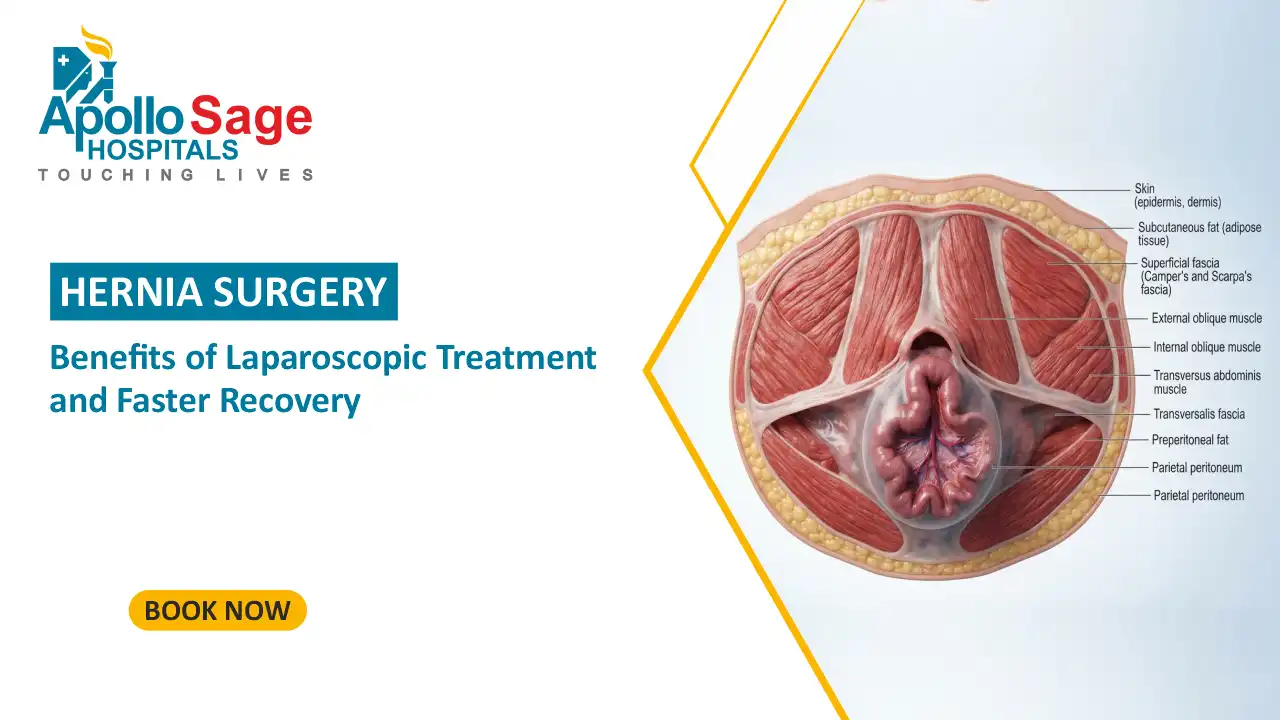
A bit of tissue poking out where it should not be - that is what happens during a hernia. Common? Yes, but still odd how often it shows up without warning. Most times, the trouble appears around the belly, sometimes lower down near the groin. Old scars from past operations might give way too, letting something slip through.
Many people tend to overlook hernias since early signs feel minor or cause no discomfort. A bulge might show up only while coughing, standing up, or moving heavy items. Lying flat can make it vanish from sight. Yet healing without help never happens. Without care, the problem grows slowly - sometimes leading to serious trouble later.
Why Do Hernias Develop?
The abdomen wall is usually made up of a combination of muscle and connective tissue that holds all organs and tissues in their place. If there is ever a weakness present in the abdomen wall, then parts of the intestines or tissue could project through that area of weakness to form a hernia.
There are several common risk factors for hernias, including:
- Heavy Lifting
- Chronic Coughing
- Obesity
- Pregnancy
- Severe Constipation
- Prior Abdominal Surgery
- Present Since Birth Weakness of Abdominal Wall
A hernia in the abdomen won’t heal by itself once it forms. Fixing it requires surgery - no other option works.
Most Common Types of Hernias
1. Inguinal Hernia: Inguinal hernias are located in the groin and are far more common than any other type. Most common in males, inguinal hernias can produce a pain, swelling or bulge in males that becomes prominent when standing or straining.
2. Femoral Hernia: Femoral hernias occur just below the inguinal canal and more commonly occur in women than in men. Femoral hernias are often asymptomatic, but have a higher complication rate than inguinal hernias and require surgery to prevent complications.
3. Umbilical Hernia: Umbilical hernias occur at the umbilicus (navel), and in adults are often found in obese or pregnant patients, or those with abdominal pressure.
4. Incisional Hernia: Incisional hernias occur at the site of a previous surgical incision, where the abdominal wall support structures have weakened over time.
5. Hiatal Hernia: Hiatal hernias are unique in that they involve part or all of the stomach moving up into the thorax through the diaphragm. Hiatal hernias may cause symptoms including GERD, heartburn, and regurgitation.
Signs and Symptoms of Hernia
Some of the Common Hernia Symptoms Include:
- Feeling of heaviness or pressure in localised area, such as abdomen or groin
- Bulging or swelling in abdominal area (due to increased intrabdominal pressure) or in groin (inguinal or femoral)
- Pain during lifting, coughing, or bending
- Pain in localised area
- Pain during activity
Please Note: Some hernias can be painless and the lack of pain does not indicate that there is no harm associated with the condition.
Reasons Not to Ignore Hernias
One of the greatest dangers of an untreated hernia is strangulation, which occurs when the tissue that has come through the abdominal wall becomes stuck and loses its normal blood supply.
Strangulated hernias are considered an emergency situation and could lead to:
- Severe pain
- Nausea and vomiting
- Intestinal obstruction
- Damage to the tissues (due to lack of blood supply)
Many of these conditions require emergency surgery. Early treatment reduces the chance of experiencing one or many complications associated with a hernia.
Modern Hernia Treatment Options
Surgery is the best treatment for hernia, today's hernia surgery is safer and faster.
Open Hernia Repair: In open surgery, the surgeon cuts directly over the hernia and repositions the bulging material and reinforces the weak spot with a mesh. Open repair is still a viable option for some patients and certain hernias.
Laparoscopic (Keyhole) Surgery: Laparoscopic hernia repair is a minimally invasive procedure performed by making small incisions and using a camera and specialized instruments. This technique has many advantages over open surgery.
Benefits of Laparoscopic Hernia
- Less Post-Operative Pain: Since there are smaller incisions, patients experience less pain after surgery.
- Faster Recovery: Most patients can return to normal daily activities much earlier than open surgery.
- Smaller Scars: The minor cuts leave little scarring.
- Reduced Risk of Infection: Smaller wounds reduce the risk of wound complications.
- Early Return to Work: Many patients are able to return to office work and other activities quickly after surgery, depending on their health.
- Effective Treatment for Bilateral Hernia: Laparoscopic hernia repairs can be performed on both sides of the groin through the same small incision.
Frequently Asked Question
Is Mesh Safe for Hernia Repair?
Yes. Surgical mesh has been used safely in hernia repair for many years and is considered the standard treatment in most cases. It can help to fortify the abdominal wall and prevent recurrence.
Can a Hernia Be Treated Without Surgery?
A hernia cannot be permanently closed without surgery and support belts or trusses only temporarily relieve the symptoms.
How Long Does Recovery Take?
Recovery times depend on the type of surgery and the patient's health. Most patients having a laparoscopic operation recover and are able to return to daily activities quicker than those having an open operation.
Can a Hernia Return After Surgery?
While the risk of hernia recurrence is low, obesity, lifting, coughing, and poor tissue quality can increase the risk. Following post-operative instructions and a healthy lifestyle can reduce recurrence.
When Can I Resume Exercise?
Light activities like walking can usually be resumed soon after the surgery. Strenuous exercise and heavy lifting should not be resumed until cleared by your surgeon.
Conclusion
A hernia may appear to be a minor issue in its early stages, but it should not be ignored. Since hernias do not heal spontaneously, prompt diagnosis and treatment are necessary to prevent complications.
With advances in laparoscopic and robotic assisted surgery, hernia surgery has become safer, less painful, and has a quicker recovery. If you have a lump, swelling or pain in the abdomen or groin, consult a surgeon.
At Apollo Sage Hospital, patients receive the best hernia care with the help of the best of the surgical expertise, technology and individualized care.
