




ENDOSCOPIC SPINE SURGERY IN BHOPAL
Understanding Endoscopic Spine Surgery: Benefits,Procedure, and Recovery
Ask anyone who has spent six months living with serious back pain, and they will tell the patient the same thing: it takes over everything. Not just the obvious stuff like lifting groceries or sleeping through the night, but the smaller indignities too. Putting on shoes. Sitting through a meal. Getting up from a chair without bracing yourself against something. Chronic spinal pain does not just hurt; it quietly shrinks their worlds.
For a long time, patients with herniated discs or compressed spinal nerves faced a fairly stark choice: manage the pain with medication and physiotherapy, or go through open surgery with its long recovery and real risks. That gap has narrowed considerably. Endoscopic spinal surgery now sits in the middle, a procedure that addresses the structural problem directly, without the collateral damage that made traditional surgery so daunting.
What Endoscopic Spinal Surgery Actually Involves
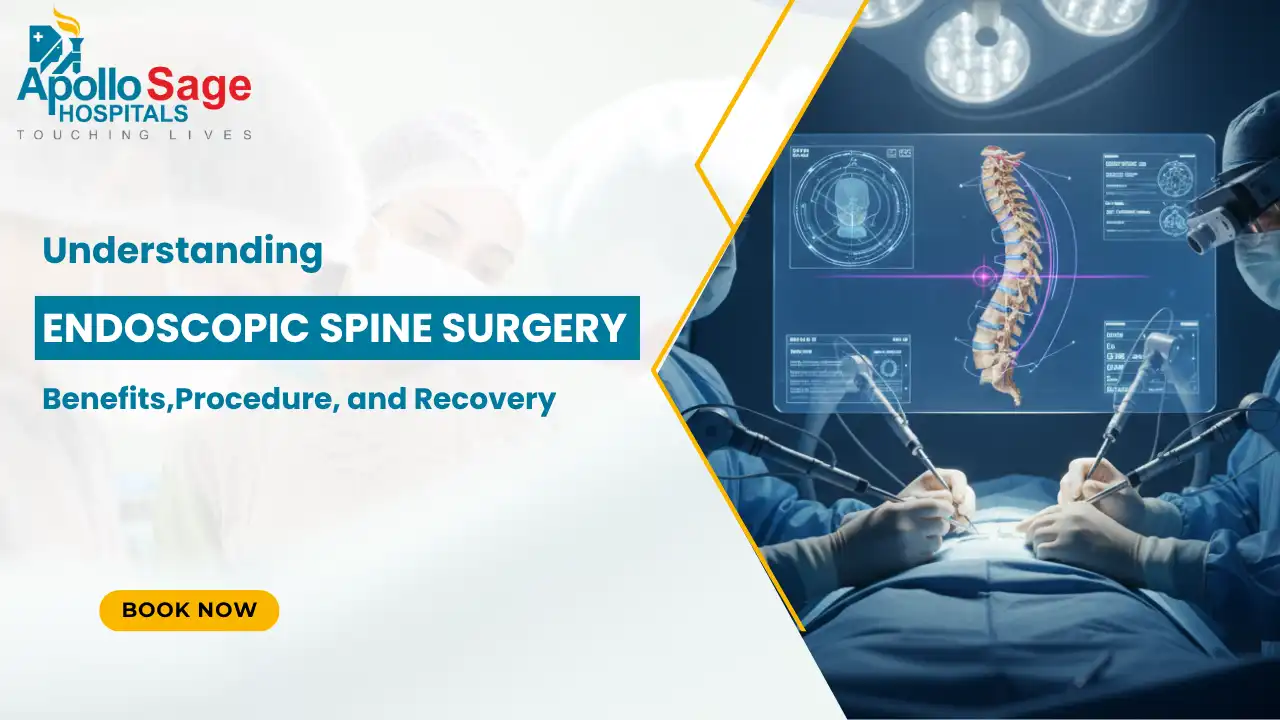
The core idea is straightforward. Instead of opening up a large section of the back to access the spine, the surgeon works through an incision roughly the size of a keyhole. A thin tube called a cannula is guided into position using live imaging, and through it the surgeon inserts both a small camera and the instruments needed to carry out the procedure. Everything is visible on a monitor in real time. The damaged tissue, a disc fragment pressing on a nerve, for instance, or bone material causing stenosis, is removed or corrected with precision.
What this means for the patient is less muscle damage, less bleeding, and a dramatically shorter hospital stay compared to conventional open surgery. Many people are up and walking the same day. That is not marketing language; it reflects the genuine mechanical difference between cutting through layers of muscle to reach the spine versus working through a narrow corridor that leaves most of the surrounding tissue untouched.
The Different Procedures That Fall Under This Category
It is worth knowing that the ways of endoscopic spine surgery are not all identical. The approach depends heavily on what is wrong and where. A transforaminal endoscopic discectomy, for example, reaches a herniated disc through the natural opening beside the vertebra, useful for problems in the lower lumbar spine. An interlaminar approach comes in from the back, between two vertebrae, and is often used for disc issues at the L4-L5 level. Endoscopic foraminotomy widens the bony channel through which nerve roots travel, relieving the compression that causes radiating leg or arm pain. Each of the types of endoscopic spine surgery has specific indications, and surgeons choose between them based on the patient's imaging, symptom pattern, and anatomy,, not a general preference.
Who Performs These Procedures in Bhopal
Endoscopic spinal surgery is technically demanding. It requires not just surgical skill but a specific kind of spatial awareness. Operating through a narrow tube on structures that sit millimetres from critical nerves demands experience that goes beyond general orthopaedic or neurosurgical training. Spine surgeons in Bhopal who specialise in endoscopic techniques typically complete additional fellowship training focused specifically on these minimally invasive methods.
When researching options, patients should look past general claims of 'minimally invasive surgery' and ask specifically about the surgeon's endoscopic case volume. The best endoscopic spine surgeons in Bhopal will be able to give honest answers about how many of these procedures they perform annually, what their complication rates look like, and which cases they consider outside their scope. That last point matters : a surgeon confident enough to refer a patient elsewhere when the case is complex is often more trustworthy than one who never declines a case.
How the process of Recovery really looks like
Recovery timelines vary, but the general picture for endoscopic procedures is considerably better than for open surgery. Most patients are mobile within twenty-four hours. Depending on the nature of the work, many return to a desk job within two to three weeks. Physical work takes longer, six weeks is a more realistic target, with physiotherapy playing an important role in rebuilding the supporting muscles around the spine.
Apollo Sage Hospital spine surgeon in Bhopal managing post-operative care will typically advise against prolonged sitting in the first couple of weeks, not because movement is dangerous but because sustained postures can slow healing in the disc space. Short, regular walks are actively encouraged. Pain after surgery is usually manageable with oral medication; the dramatic relief from nerve compression often means patients feel meaningfully better within days, even accounting for the soreness at the incision site.
Karan's Experience
Karan was 41 and had been dealing with shooting pain down his left leg for nearly eight months before he finally went beyond his local GP. The diagnosis of a disc herniation at L5-S1 pressing on the sciatic nerve had been confirmed by MRI for several months, but he had been hoping it would settle on its own. It did not. After a consultation with one of the best endoscopic spine surgeons in Bhopal, he was booked for a transforaminal discectomy. He went in on a Tuesday morning and was home by Wednesday afternoon. The leg pain, which had been relentless, was gone almost immediately. Back pain from the surgery itself lingered for about ten days. Three weeks later he drove himself to his follow-up appointment with the spine surgeons, something he had not been able to manage alone for months.
Conclusion
Not every spinal condition is suitable for an endoscopic approach. Severe instability, certain deformity corrections, and multi-level disease may still require open surgery. The types of endoscopic spine surgery work best for contained disc herniations, single level stenosis, and nerve compression without significant structural instability. A thorough consultation including a review of recent MRI or CT imaging is always the first step. The best endoscopic spine surgeons will tell patients honestly whether patients are candidates, and if patients are not, they will explain why rather than simply offering the next available procedure.
Back pain does not have to be permanent. For the right patient, endoscopic spinal surgery offers a way back to ordinary life without the recovery ordeal that once made surgery a last resort.
